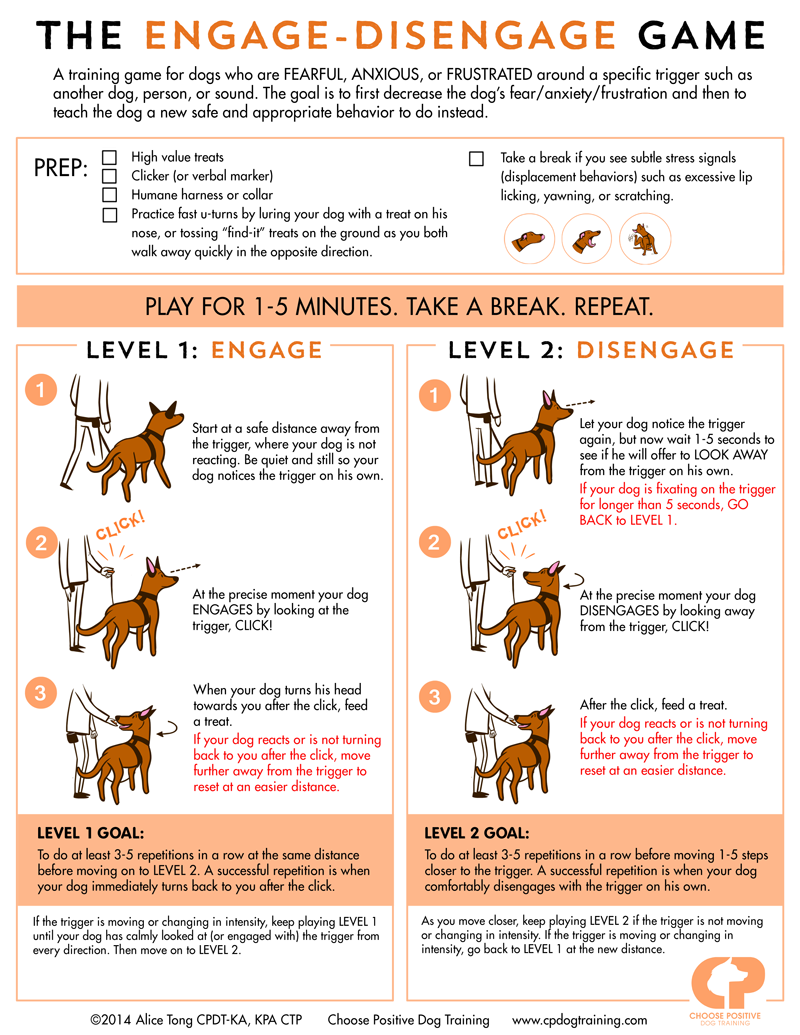
A few weeks ago I met with a client for a private lesson with her reactive Border Collie, Fred. We’ve been doing lessons for a while now. At that lesson she confessed that for several weeks she had been thinking “this clicker thing” (AKA engage/disengage game) was not going to work at all. She told me that she trusted me and had been giving it a good try even though she wasn’t convinced. She said that once she really put in the time it “totally started to work.”
Last weekend (just over one month since that conversation), I graduated Fred and his mom from their private lessons. I always send out a survey to get feedback from my clients’ regarding their experience of training with me. She wrote a whole bunch of stuff about how much more fun it is to go for a walk with Fred now that he is calmer but here’s the part that made me proud and made me laugh: “Jennifer is spot on with her training. We questioned one or two things along the way thinking that they would not help or work. We followed her instructions to a “T” though, and were proved wrong every time. She knew what she was talking about, and if her instructions are followed exactly, the results are there. It was amazing!”
Now, here’s my confession: I was faking it.
I took Sarah’s seminar last March and started trying the “clicker thing” with a couple of clients as soon as I got home. I’ve been training dogs professionally for about 6 years and have done marker training before but I had never used a clicker to deal with reactivity. I gave this client a clicker and bait bag and told her that we were going to try out this new stuff I had learned. She knew I was experimenting with her and her dog and she was willing to give it a shot. There was no question in my mind that click-for-looking/click-for-looking-away works. I was just crossing my fingers that I could get it to work for Fred and his mom. I’ve been struggling for a long time with how to help clients with reactive dogs. Way too long. This is not the first reactive dog that I’ve graduated since taking Sarah’s seminar but the feedback on this one is immensely satisfying. Thank you Sarah!
I recently began working with a very lovely little dog named Lily, a female mixed breed dog who weighs about 25 lbs. She is very affectionate, intelligent and cute, however, she had a very rough start in life. Before she came to her new owners she spent most of her crucial developmental periods in isolation. She received little to no socialization and was kept inside a room in a house with another dog who repeatedly aggressed towards her.
Surprisingly, Lily is a very friendly and trusting dog towards humans. She is mostly a pleasant dog to live with. However, I was called in to assist with Lily’s intense reactivity. She is not aggressive towards dogs or people, but she was extremely reactive on lead at the sight or sound of another dog. In fact, just walking out the front door was enough to send her into a barking frenzy, and she was constantly hyper vigilant and explosive while outdoors. Inside, she could be fairly calm but would erupt into seemingly randomly triggered spouts of intense barking and was difficult to redirect or settle.
After doing two sessions with Lily and her owner I recommended that they speak to the veterinarian about behavioural medications for Lily. This is something that I am extremely infrequent to recommend, simply because I think most dogs with behaviour problems do not need it, and most behaviour problems can be tackled through behaviour modification and training. However, there are several reasons why I thought this would be a good choice for Lily:
Her reaction was extremely intense, difficult to interrupt, and she had a very poor recovery from stress.
Her threshold was extremely high, simply being outside was incredibly stressful for her and sent her over the top into over stimulation and frenzy.
Her triggers were multiple and often it was impossible to determine exactly what it was that was setting her off.
The behaviour was severely impacting Lily’s quality of life as well as her owner’s.
Lack of early stimulation can effect brain development, which in turn can influence behaviour.
Sometimes, when dogs do not get enough stimulation in the early parts of their life and through critical development periods they can have problems tolerating stressors as well as a normally functioning dog. This can also occur if the mother is sick or stressed while the puppies are in utero. I thought that the complete isolation Lily lived the beginning of her life in could definitely have caused abnormal brain development, and she simply maybe was having a physiologically different response to stress. This type of thing is out of the realm of a behaviour consultant, so I suggested that Lily’s owners consult with the veterinarian and also told them about the option of doing a phone consult with a Veterinary Behaviourist via their vet since we do not have that specialist option locally. One of the prices we pay to live in the gorgeous mountains.
The last time I saw Lily was just over 7 weeks ago and her owners took her to the vet very shortly after our last appointment. Provided with the behaviour history as well as my assessment and notes, the vet and Lily’s owner decided to try putting Lily on Prozac. We wanted to wait in between sessions to give the medication some time to take effect in Lily’s system, but her owners continued to work on some of the foundation skills we had started on such as go to mat and conditioning her to a head collar.
I just saw Lily today and I was blown away by the positive difference in her. The previous times I would arrive at the home, Lily would erupt into constant, high volume barking. She was difficult for the owners to redirect and gain control of her. She would rush down the stairs, barking the entire time and run up to me barking. She would not settle until I got up the stairs. This session, I knocked on the door and heard her bark lightly 4 times, and then the owner sent her to her mat, came down and answered the door and Lily remained calm. Once released off her mat, Lily barked lightly two more times on her way over to me where she greeted me happily and politely. She settled immediately and enjoyed some affection with me once we were upstairs.
The previous times I visited Lily, multiple times per session she would also begin barking for no apparent reason (there was no visual or auditory stimuli we could detect) and took a while to settle. This session, there was not so much as a peep out of her. She was notably more relaxed and calm, but did not at all seemed sedated and was her normal lovely self.
Not Lily, but similarly cute.
Taking Lily outdoors was where I noticed and extreme difference. Previously Lily would explode the moment we crossed the threshold, even when she had been calm second before. She was barking almost constantly, hyper vigilant, couldn’t focus, and pulled constantly at the leash. She would suddenly begin to bark and violently lunge if she so much as heard a dog, and sometimes when we could not hear anything at all.
At this latest session, she walked outside happy, confidently and calmly. She didn’t bark once! Last time we tired to work her outdoors, we barely made it a quarter of the way down their driveway. Today she cheerfully trotted down the entire driveway without a hitch. When I brought my dog out there was an outburst at the initial site of him, but Lily was very quick to redirect and settled shortly. With a bit of work we were then able to walk her calmly up to my dog within a few moments, and she promptly greeted him very politely and appropriately. When I brought out my second dog she was very interested, but did not bark at all. She was able to nicely walk right past him, and then was able to meet him and even tried to play. With my third dog she again did not bark at all, and while interested, was able to ignore her easily.
I was incredibly pleased with the difference in Lily with the addition of behavioural medication to her treatment plan. To be honest the results were better than I could have imagined! Lily is able to be outside without being stressed constantly and is able to go on walks with her owner on a regular basis without it being an unpleasant experience for both of them. I’m happy to say Lily will be joining us in our outdoor group classes next week.
While I do feel that behavioural medications may sometimes not be the best choice, and are certainly not a replacement for training, this was a case where the dog really needed it and this decision will improve the quality of life for Lily and her human family. Sometimes we are dealing with dogs whose poor start in life has actually led them to have abnormal brain development, and in these cases it might be time to consider some extra help beyond behaviour modification and training.
Our outdoor group class which Lily will no be able to join.
Some signs that it might be appropriate to consider medication as part of a treatment plan can be: when the behaviour is is provoked by routine occurrences or the triggers are multiple and difficult to predict; if the dogs reaction to provoking stimuli is very intense and disproportionate; if the dog’s recovery to stress is poor meaning that their reaction may last a while or they take a long time to return to baseline.
If you think a dog you are working with (or your personal dog) may benefit from medication, it may be time to consider speaking with your vet or a veterinary behaviourist. Veterinary behaviourists are not geographically available to all of us, but some of them, like (Animal Behavior Clinic in Portland) can offer phone consultants to your client’s veterinarian.
Veterinary behaviourists may also have some insight into important medical tests to run before placing a dog on medication, as they did with our corgi Kalani. It was recommended we test for proper liver functioning in her due to her symptoms and it turned out she has some form of liver disease like a shunt. Lani has been placed on a prescription diet and her behaviour problems are improving. My general vet is not a specialist in the health links to behaviour problems and didn’t pick up the behavioural symptoms of liver disease.
Behavioural medications should not be viewed as a quick fix – they are best used in conjunction with a training and behaviour modification program with a qualified professional. Sometimes it may be necessary for the dog to remain on them their entire life, but other times it can be a short term solution to help behaviour training take hold. I look forward to working more with Lily and her family, and am excited for what the future holds for them. I am thrilled that the medication has already helped Lily as much as it has, and I see a bright prognosis for her with her owners being dedicated to continuing training with her.
Free shaping is a type of animal training where you teach the behaviours in gradual steps using a marker, like a clicker, and rewards. Shaping can be a great way to teach some difficult behaviours, expand your animal’s capabilities, exercise your animal’s brain, and build your chops as a trainer. There has been a recent trend pushing toward free shaping as much as possible. While it is a powerful training tool, it can also be frustrating for the learner if the shaping is done poorly. Free shaping is sometimes not the most effective training option.
If you want to be successful building behaviours with shaping, you will need to have good timing. There are lots of games you can play to practice timing with a clicker. Try bouncing a ball and clicking every time it hits the ground. Or, while watching TV, take a few minutes and click every time the camera angle changes. If you don’t have good timing, you’re not going to be able to click your target’s behaviour, and you might end up shaping some pretty bizarre actions.
Plan ahead
Before beginning shaping sessions you should have a plan of what the probable steps of the behaviour should look like. Start with something the dog can and likely will do easily, and build up in logical steps to the finished behaviour. For example, if I wanted to train my dog to bow, my steps might look something like:
A common misconception about free shaping is that there is a lack of information provided to the learner. The truth is that if you are free shaping well, you will provide plenty of feedback to the animal. Your goal should be about 15 clicks a minute—that is feedback an average of every 4 seconds. With that rate of feedback and reinforcement, your dog should be having lots of success, understanding what you are looking for, and working eagerly for you. If you notice your dog getting frustrated, then you are probably asking too much and need to adjust your criteria.
When you are getting the 15 clicks a minute consistently after a few training sessions, then it is time to wait the dog out before offering the next step of your shaping plan. Keep your training sessions short, only a minute or two in length, and track how many treats you go through so you know what your rate of reinforcement is. Count out a certain number of treats before the session, and count what was left afterward to know how many clicks per minute you logged.
Cues to communicate
Another objection to free shaping is that it causes dogs to be frantic and to offer behaviours continually. While this definitely can happen, I don’t feel it is the fault of free shaping itself. I believe that dogs get this way because their trainers do not add cues early enough. It’s commonly accepted in the clicker training world that you do not add a cue until the behaviour is perfect. However, this gives the animal plenty of rehearsals of the behaviour without a cue attached. The more times the dog does the behaviour without being cued, and gets reinforced for it, the more likely it will be that the dog will offer that behaviour when it hasn’t been asked (cued) to do so.
So, when do you add a cue? As early as possible! When you can predict with relative certainty that the dog will do some form of the behaviour, start attaching a cue. Once you add a cue, do not reinforce un-cued responses afterwards. You can always change your cue once you get the behaviour exactly where you want it so your final cue is not attached to the imperfections associated with training.
Provided that your dog has a good understanding of the concept of cues and you are diligent about getting behaviours on stimulus control, this practice will help avoid frantic offering of behaviour. Your dog will know the difference between when it is time to experiment (shaping) and when to perform a specific behaviour when asked. Another trick I really like to do that seems to help dogs have a “shaping off-switch” is to use “game on” and “game off” signals to indicate when we are going to start shaping and when we are done. I will use “are you ready?” to mean we are going to start training and “all done” to tell the dog our session is over.
Reward placement
One of the single most important efforts that can speed up your shaping sessions (and training in general) is utilizing the placement of rewards. For example, you can deliver your reinforcement in a physical location that will jump-start your dog to offer the next repetition. Reward placement comes down to planning, but also to thinking on your feet. Where do you want the dog to be positioned to set up for the next rep? If you want the dog to stay in position, deliver the food directly to the dog. If, for example, you are trying to train a dog to go around an object, click for just moving beside it and toss the food so that the dog has to move even further around it. Instead of having the dog return to you to get the food, jump-start the behaviour of moving around the object by using your food reward placement to get the dog there. If you want to set the dog up to repeat an action, go to a platform, for example, toss the food away after you click so that the dog moves off and has the opportunity to return to the platform.
Many people think that they have to be extremely sterile during clicker training, and during shaping in general. Not true! Put some heart into it! If you are engaging, your dog is going to enjoy the process so much more. Training should be a game that both of you enjoy. While you should remain quiet before you click, there is no reason why you cannot praise the heck out of your dog after a click, for a big breakthrough, or at the end of a session. Relax, have fun!
Shaping—just one tool
While shaping can be a really cool way to teach some behaviours, it is not always the most efficient or effective way to train a skill. This is why shaping is not something I use to train all the time; I use shaping if I cannot get the behaviour easily in another manner, or if I want to challenge myself and my dog. To avoid frustration and make training go smoother, I suggest that you pick a method that will get the behaviour started as quickly as possible. Often, this choice will not be shaping. Utilizing prompts such as targets, setting up the environment, or even just capturing may be much faster means of training. You can even mix a combination of targeting, shaping, etc— whatever works best to explain to the animal what you are looking for.
One wonderful benefit of shaping is that there are no prompts to fade, since the training process is based completely on the dog offering behaviours. If you are going to use a prompt, it is important that you do not use it more than is necessary. For example, if the animal will do the behaviour naturally, you don’t need to set up the environment. If you can set up the training area to get the behaviour easily, try not to use targets. If you can get the job done with targets, avoid using a lure. The less you prompt, the less you have to fade. Remember, if you are using a prompt, you want to fade it as quickly as possible to avoid the animal’s reliance on it. Get the prompt out of the picture as quickly as you can.
Some dogs will prefer shaping more than others. If one of you, you or your dog, does not really like shaping, that’s just fine. There are plenty of other training tools to teach your dog to perform many wonderful tricks and behaviours. My 5-year-old Belgian shepherd, Dexter, loves to shape and is really fun to work with. I will do shaping with him often, just because he is so enjoyable to train this way. In contrast, my young Australian shepherd, Brew, finds shaping a frustrating process. For Brew, I limit the amount of shaping I do and try to use other methods to prompt behaviours with him. I do work on shaping with him occasionally, as it is good practice for him to think and use his brain in that way. Sometimes shaping really is the best way to accomplish my goals.
A useful technique
Shaping is often misunderstood and can be difficult to do well. But if you have well-developed timing and planning skills, with some practice it can be a helpful addition to your toolkit—especially as there are some behaviors you can shape that are very difficult to train in another manner. Overall, shaping is an excellent way to enhance your skills as a trainer and exercise your dog mentally.
Happy New Year! Did a new dog join the family this holiday season? Are you aiming to start a brand-new year with fine habits and manageable goals? Is this the time to tackle your dog’s problem behaviors, the ones that have had you perplexed?
A solid foundation in positive training gets you off to great start, either with that new puppy or with your older dog. But training has to be more than just a foundation, especially if there are any undesirable canine behaviors on the scene. Consider the whole picture when it comes to behavior problems, and review the most common reasons a dog “behaves badly.” Understanding the common explanations for behavior problems is the first step in solving and preventing those problems.
Reason #1: Not Enough Exercise
Dogs need physical exercise to be happy, and on-leash walks around the block are not usually sufficient. Activities like off-leash runs, running with you on a Walky Dog or Springer bike leash, fetch games, a pole toy like a Chase-It, or dog-dog play/daycare for social dogs are more appropriate exercise choices.
Reason #2: Not Enough Mental Stimulation
Mentally stimulating puzzle toys help eliminate boredom and keep dogs out of mischief.
Often-forgotten mental stimulation is essential for a well-balanced dog. Mental exercise can be just as tiring as physical; someone who works at a desk job can be as tired at the end of the day as a landscaper. Utilizing your dog’s daily rations for food-enrichment activities or for a bit of training as often as you can will go a long way toward tiring your dog mentally. Something as simple as hiding your dog’s meal or spreading the food in the yard can be an enrichment activity. Dogs love to forage or work for their meals.
Reason #3: Health Problems
Health problems cause behavior issues more often than people realize; health issues are often missed. Think about it—if you are not feeling well, you are probably going to be cranky or not yourself. Your dog is the same way, except a dog does not have words to tell you. Health issues that can change your dog’s behavior include arthritis, hip dysplasia, luxating patellas, sore teeth, thyroid problems, epilepsy/seizures, ear infections, digestive issues, skin or environmental allergies, yeast infections, hearing loss, eyesight loss, and cancer. If aggression or another behavior issue shows up suddenly, contact your vet. There is a good chance one of the above health complaints, or something related, could be causing your canine to be cranky.
Reason #4: Genetic Issues
Sometimes behavior issues have genetic causes. Behaviors that range from aggression to hyperactivity can come down to what your dog inherited from its parents. If you are buying a puppy, it is imperative to find out if the parents have positive temperaments. If they do not, the chance of your puppy having a poor temperament is very high. Sometimes, with very good socialization, you can override poor genetics, but often even with the best socialization program there are behavior issues if your dog has lost the gene pool lottery. Genetic issues tend to show up very young and are difficult to treat with behavior modification.
Reason #5: Inconsistent Environment
If you sometimes let your dog jump on you because you’re wearing casual clothes, but at other times punish him jumping, how fair is this to your dog? Dogs do not know the difference in clothing! This pattern, or lack of pattern, is very confusing for them and can cause anxiety. It reinforces jumping or any other behavior you are rewarding inconsistently. If you want your dog not to do something, be consistent by making that clear to him in a kind manner. If your dog jumps, for example, take time to practice sitting with positivereinforcement (providing something your dog likes such as treats or play immediately after the behavior) and ignore your dog completely if he jumps. Ignoring your dog means no talking, touching, or eye contact, as all are forms of attention and can reinforce behavior you don’t like. Cross your arms, turn your back, and ignore your dog until all four paws are on the floor.
If your dog has a behavior problem, look to yourself—how do you respond? There is an excellent chance you have been reinforcing the behavior with attention, and may have actually trained your dog to perform that behavior! Another example of a reinforced bad behavior is barking. Dog barks, you yell, dog thinks you are barking along—look at the attention I got! Dog barks more, you scold more, dog barks more, and on and on it goes.
Having a consistent set of boundaries and consistent rules in your house helps your dog understand that the environment is predictable. It also shows your dog that you provide guidance, leadership, and access to all the good stuff. Take the time to teach your dog rules using patience and positive reinforcement. Teaching your dog not to jump up, or training to eliminate any undesirable behavior, takes patience, consistency, and knowing what to ignore and what to reward.
Reason #6: Misunderstanding the “Normal” Dog Behavior
Barking is a natural behavior for some breeds.
Normal dogs bark, pull on leash, eat poop, roll in dead things, jump up to greet, guard food and bones (to a degree), growl when they are threatened, chew whatever they can get their mouths on, pee and poop wherever, nip, protect property or their family, herd, chase small animals, and sometimes kill small animals. All of these “nuisance” behaviors are perfectly natural parts of a dog’s repertoire, and vary depending on breed. Find a dog breed that is compatible with your lifestyle. It’s simply unfair to get a mastiff and be shocked when he barks at strangers approaching your home. These dogs have been bred for thousands of years to be guard dogs. Siberian huskies and northern breeds may not be reliable off leash and may kill small animals. Border collies might herd your children. Daschunds are known to bark a lot. These traits are due to selective breeding to perform a job or to natural canine behavior. Sometimes you can train an alternative behavior, and sometimes you cannot. It depends on how genetically hardwired the behavior is.
Reason #7: Changes in Routine
Changing the routine can be stressful for your dog, and may cause your dog to act out. Just like us, dogs need a sense of security. Drastic changes in environment or routine can really throw them off, causing anxiety that is commonly expressed as problem behavior. Moving to a new house often causes a lapse in house training, among other issues. A change in work schedule can confuse your dog, and a new pet or child joining the family can also be very stressful. In all of these cases, be patient with your dog and guide him through the struggle with kindness while he adjusts to the changes.
Reason #8: Changes in Diet
Switching your dog to a poorer quality or less suitable diet may also cause him to act up. Diet has a huge influence on behavior (going back to health influencing behavior). Switching your dog’s diet to something that is of poor quality or that doesn’t agree with him may change how the dog acts. Always feed your dog a high-quality diet, and change foods gradually over a week or so.
Reason #9: Poor Socialization or Negative Socialization
Proper socialization lays a foundation for a well-balanced dog.
Socialization is the process of providing your puppy positive, controlled exposure to other dogs, people of all types, sounds, surfaces, and new experiences. Dogs need to be socialized to the human world starting as young puppies and continuing throughout their lives. The period from 3-16 weeks of age is the most critical socialization period. This time lays a foundation for a well-balanced dog. If a puppy doesn’t get proper socialization during its critical period, it can grow up into a shy, fearful, or aggressive adult. A well-run puppy class can be a fun way to kick-start your dog’s socialization skills.
Even a dog that has been well socialized can develop behavior problems after negative experiences. Being attacked by other dogs or teased by children when out in the yard are occurrences that can affect your dog’s behavior negatively. A poor experience at the vet, training class, or groomer can do the same. Be selective about where you take your dog to socialize and which professionals you trust to handle your dog. I would also advise against leaving your dog alone in the yard when you are not at home, as you never know what could happen.
Reason #10: Fear Periods or Adolescence
If your normally fearless puppy suddenly turns shy one day, don’t panic. It is normal for puppies to go through several fear periods as their brains develop. The first generally occurs somewhere around 8-12 weeks of age and another period occurs around 5 or 6 months of age. Depending on the breed and bloodlines of your dog, your dog may experience more or fewer fear periods. Do not panic; just let your puppy go through this phase. You may want to avoid going to the vet, training class, groomer, or new places for a week until your puppy is back to his normal behavior. If during a fear period something frightens your dog, it imprints very strongly. So, rather than trying to work through a fear period, it might be best just to let it pass.
Adolescence starts at about 6 months of age and usually continues to 12 to 18 months of age. Adolescence is when most dogs are turned over to shelters. This is a period when puppies start testing their world and their boundaries. A previously “good” dog may become a nightmare. Continued obedience training, maintaining structure and boundaries, patience, and skilled management are all essential practices during this phase. Management means setting up the environment so that the dog doesn’t get a chance to do “naughty” things, and includes techniques like crating the dog when you cannot supervise directly.
Understanding common potential causes of problem behavior in dogs can make it easier to sort out what is happening with your own challenging canine. Eliminate each of the various origins of change, if possible narrowing down to a trigger for the undesirable behavior your pet is exhibiting. With more detailed information, you will have a better chance of eliminating the frustrating behavior quickly. Of course, if your dog’s behavior problems are severe, look for a reputable trainer to help you.
Hi Sarah, I have a couple of questions. I’ve had two sessions – two nights in a row, where the owner’s timing is way off. I was trying to find ways of helping them to improve their timing, do you have any suggestions?
Secondly, do you ever encounter people who are simple clicker dyslexic? If their timing is just that awful, do you think it is something they will work out or do you use a different tactic?
Thanks! ~ Krista M.
Hi Krista! Thanks for taking the time to write.
To answer your questions it’s not uncommon to find people who’s timing with a clicker is not great. Most people, however, will improve with some practice.
For the average person the mechanical skills that are involved with dog training are completely foreign to them. That is why I like to break these things down into very small steps. It may seem easy to a pro, but for someone who isn’t practiced clicking, treat delivery, and leash handling can be overwhelming.
Specifically with the clicker I teach it step by step – starting with simply holding the clicker, then practice timing before adding in treat delivery to the whole picture. Treat delivery is a skill in it’s own and it is practiced first without the clicker so that people can practice quiet/neutral hands, different neutral pre-click hand positions, and get treat delivery smooth before adding another layer of complexity. Once people have had a chance to play with that and the clicker on it’s own, food is added in to that mix. Just like good dog training, things are broken down into achievable steps and difficulty is increased gradually at levels the learned can easy master.
Click when the fingers are fully extended on both hands.
Timing is best practiced first without the extra complexity of food delivery. There are a few exercises I will commonly use to help people with their timing and observation skills: On the Ball, The Hand Game, and Click the Change. On the Ball involves throwing a ball into the air, instructing your pupil to click when the ball is at the highest point. You can also have them practice using a verbal marker “yes” and try “good dog” here to nicely illustrate the precision offered by a clicker. The Hand Game is simple, but fun and also effective. Instruct your student to click when both of your hands have all five fingers fully extended – your hands can be in any position but they only click when both hands have all the fingers extended. When they get good at this, you can try to trick them. Click the Change is a good one for people to try at home. They can sit with the clicker while they watch TV and try to click whenever the camera angle changes. To save them from becoming completely annoyed, you can suggest they do this during the commercial breaks.
There are many benefits to using a clicker or other salient marker especially for a novice trainer, so I do like to try to get people comfortable and proficient using one. New trainers often are not adept at communicating clearly with their body language or verbally, so the clicker can provide that much needed clarity to the dog. It has been my experience that if people can get moderately proficient at using a clicker during the foundation stages that they are more consistent with marking than if they are first taught using a verbal marker (this could be because I am better at teaching people to use a clicker than a marker word, however), which in turn causes their dog to learn skills faster. It is simply physically and mentally easier for us to push a button than it is to make a word come out of our mouth – that is one reason why new trainers can be more consistent with a clicker. There is also some evidence showing that animals not only learn faster with a clicker but they also retain skills taught with one for longer.
That being said, there has been the odd person that simply cannot grasp the clicker. Even with breaking things down and practice their timing is so awful that using the clicker is actually detrimental. With someone like that I will definitely just teach them to use a verbal marker – their chances of being closer to the target behaviour are much better. This is one instance where the precision of a clicker will not be a good thing and a slightly sloppier verbal marker will be preferential. Of course you run the risk of them not being very good at marking consistently, but it is better than no marker at all. For most skills we are going to teach the average companion dog, a very marker will definitely be suitable to get the job done. While there certainly are multiple benefits to using a clicker especially with a novice handler, I am not married to it. Being able to be flexible to meet your client’s needs is very important. I will never force my students to use a clicker, but I do ask them to at least try it. If they really do not like it, I will instruct them to use a verbal marker instead. Generally once they move out of Foundations classes they wean the dog off the clicker and use a verbal marker anyways.
I hope that answers your questions. Thanks for writing and until next time happy training!


 Free
Free  e animal what you are looking for.
 r dog’s problem behaviors, the ones that have had you perplexed?